
The quick answer
An uncomplicated inground installation may have an on-site construction phase measured in weeks, while a highly customized concrete pool or difficult property can take much longer. The complete project often begins months earlier with scope decisions, site investigation, company selection, permits and product scheduling. Plan the entire sequence - not only excavation-to-fill.
- Planning comes first: define the pool, yard, budget and likely site constraints before asking for final prices.
- Pool type changes the sequence: fiberglass, vinyl and concrete are delivered and finished differently.
- Approvals are local: permit, enclosure, utility and inspection requirements depend on the property.
- The yard may outlast the pool work: deck, fencing, drainage, retaining and landscaping can extend completion.
If a company promises a pool “in two weeks,” ask which two weeks it means. Is that only the shell installation? Does the schedule include permit review, electrical work, deck, fence, startup and restoration? A credible timeline identifies the phases, the assumptions and the events that can stop work.
The complete route from first brief to handover
The stages can overlap, and the selected pool system changes their length. Still, this sequence gives homeowners a useful way to test whether a quote covers the whole project.
Define the project
Begin with use: swimming, exercise, play, entertaining, relaxation or a combination. Note preferred size, depth, entry, heating, sanitation, cover, lighting and surrounding features. Add the non-negotiables - budget ceiling, target season, accessibility, retained lawn, existing structures or mature trees. A clear brief prevents companies from quoting entirely different pools.
Review the site
A pool company needs to understand how machinery and materials reach the yard, where excavated material can go and how the finished grades will drain. Setbacks, easements, overhead lines, buried services, slopes, soil, groundwater and nearby structures can affect system choice and cost. Difficult conditions do not automatically prevent a pool, but they should not be discovered casually after the contract is signed.
Select the system and complete the design
The layout becomes more than a shape on a survey. The design must coordinate water level, pool profile, stairs and benches, skimmers and returns, equipment location, deck elevations, drainage, fence and gate locations, lighting and any retaining. Product selections and engineering requirements should be resolved early enough to support a meaningful scope and permit submission.
Confirm approvals, locates and scheduling
Requirements vary by province and municipality. The project may need a pool or building permit, enclosure approval, electrical inspection, utility locates or additional review for shoreline, ravine, floodplain or protected properties. Ask who prepares drawings, who submits, who pays fees and what must be approved before equipment enters the yard. The contractor should not treat permit time as invisible.
Excavate and install the pool system
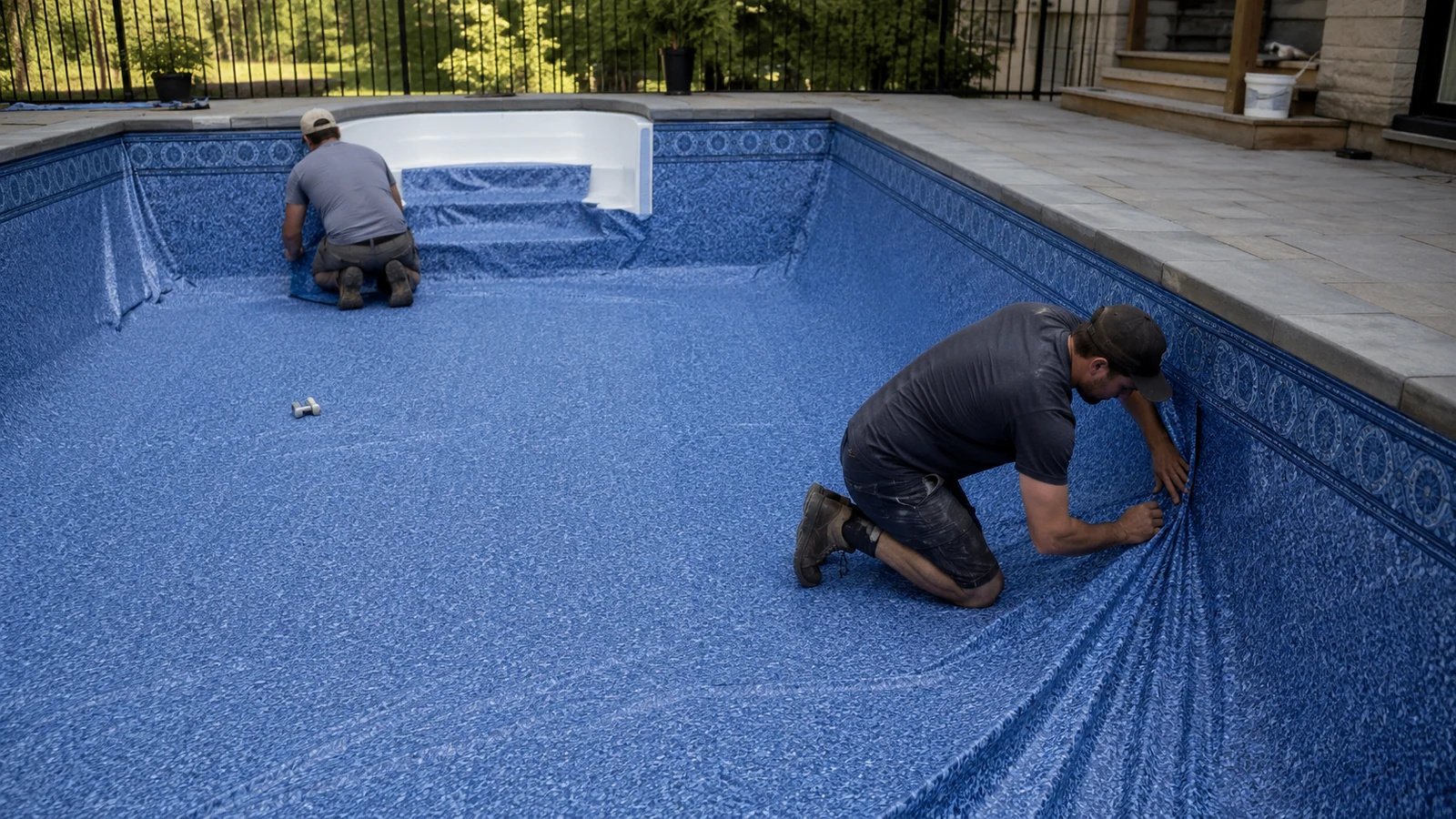
After layout, crews excavate and prepare the base. Fiberglass shells are delivered and set; vinyl systems are assembled on site before the liner is installed; concrete pools require form or steel work, plumbing and a placed shell before the final interior. Groundwater, rock, unstable soil and restricted disposal can alter the sequence. The proposal should explain how unexpected conditions are documented and priced.
Complete equipment, deck, safety and yard work
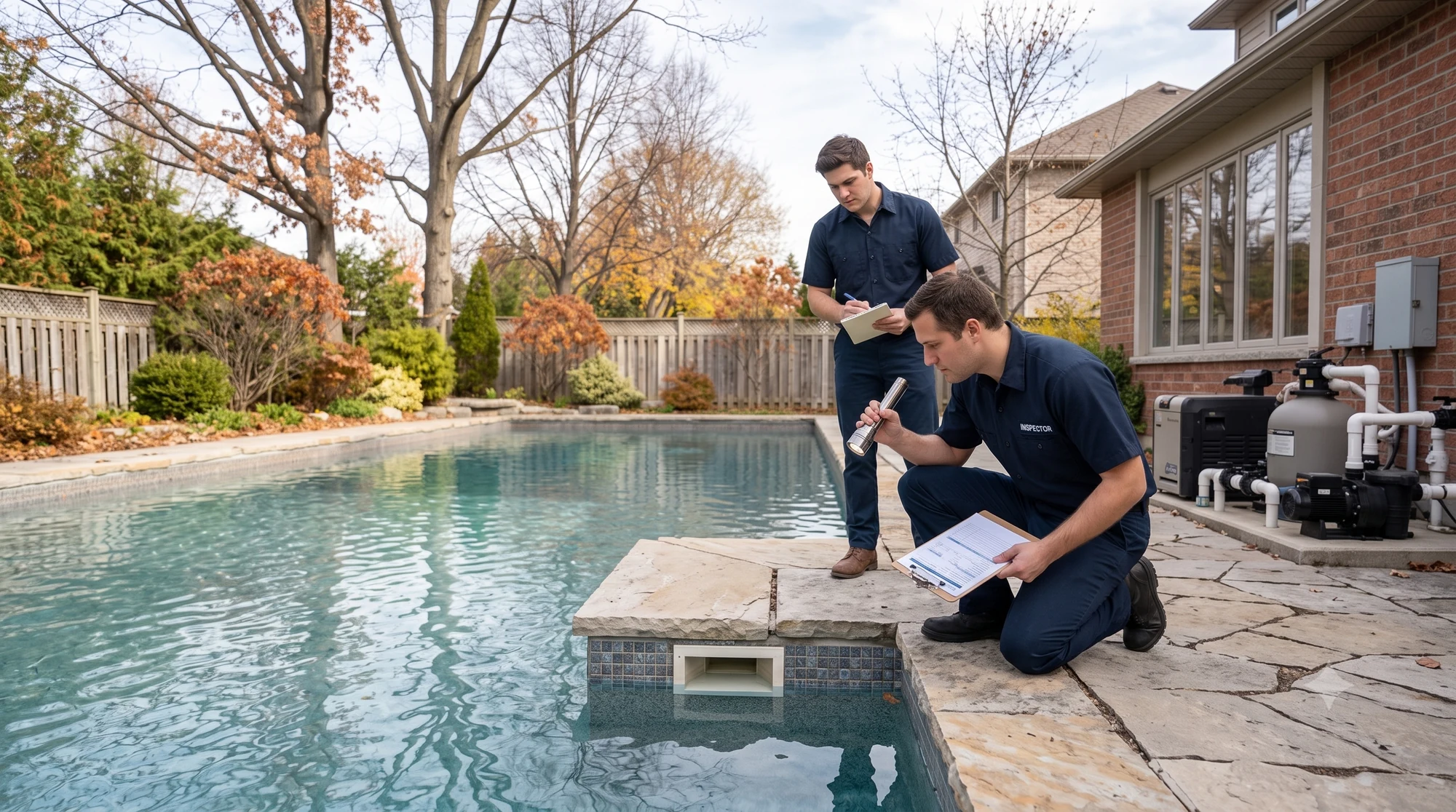
Plumbing connects to the equipment pad, electrical and bonding work is completed, and required inspections occur. Backfill and compaction must suit the system and surrounding surfaces. Deck, drainage, retaining, fencing, gates and landscaping turn the installed pool into a finished backyard. These trades can continue after the pool structure looks complete, which is why “pool in the ground” is not the same as “project finished.”
Fill, start up and hand over
The pool is filled, equipment is started and water is prepared for the selected interior and sanitation system. Handover should cover circulation, cleaning, water testing, heating, automation, normal operating levels, basic troubleshooting, winterization and warranty contacts. Collect manuals, model numbers, inspection records and written warranty terms before the final project payment.
Why pool type changes the schedule

Fiberglass
The factory shell can be set quickly once excavation and base preparation are complete. Delivery route, crane access, shell availability, plumbing and controlled backfill remain critical schedule items.

Vinyl liner
Walls, base, plumbing and other components are assembled on site before the liner goes in. Shape flexibility is strong, but weather and coordinated site work still influence progress.

Concrete
Custom forming, steel, plumbing, shell placement, curing and interior finishing create the longest and most trade-intensive route. The payoff is maximum design freedom.
No system is automatically “better for Canada.” The quality of site preparation, drainage, structure, plumbing protection and seasonal operation matters more than a broad marketing claim. Compare the system and the company’s method for the specific property.
What commonly delays an inground pool?
- Incomplete decisions: changing shape, equipment, finishes or deck elevations after ordering can reset work.
- Permit or review time: missing drawings and additional agency review can hold the start.
- Contractor capacity: established companies can build only a limited number of pools in a season.
- Product lead times: shells, liners, equipment, covers, tile and special features may not arrive together.
- Site surprises: rock, groundwater, unsuitable soil, buried structures and restricted access change the method.
- Weather: heavy rain, saturated soil, extreme temperatures and smoke or storm events can make work unsafe or unsuitable.
- Trade coordination: electrical, gas, deck, fence, retaining and landscape work may sit outside the pool crew’s direct control.
- Inspection timing: work may need to remain visible until an inspector completes a required review.
Work backwards from the season you want to swim
Early research: compare pool systems, define the yard and identify likely constraints. This is the right time to collect inspiration and decide which features materially affect the structure or equipment.
Company conversations: share the same brief with relevant installers. Ask about capacity, site-review process, preferred systems and what their standard proposal includes. Narrow the field before investing in detailed design.
Design and approvals: complete the survey-based layout, equipment choices, engineering and submissions required for the property. Order long-lead items only after responsibilities and change terms are clear.
Construction window: confirm site access, selections, utility locates, temporary protection and the milestone schedule. Keep enough flexibility for weather and inspection movement.
Completion and ownership: plan deck, fence, restoration, startup and handover as part of the project - not as an afterthought. Decide who will open, close and maintain the pool before the first season ends.
Ask every pool company for these timeline details
- What event secures the construction slot?
- Which dates are estimates, and which are contractual milestones?
- Who obtains permits, locates and inspections?
- Which products must be ordered before work begins?
- What site conditions trigger a change order?
- Which work is performed by subcontractors or separate companies?
- Is deck, fencing, drainage, landscaping and cleanup included?
- What must happen before startup and final handover?

A useful schedule explains dependencies, not just dates.The more complete the scope, the easier it is to see whether a delay belongs to weather, approvals, materials, the contractor or a requested change.
Short answers to common schedule questions
The visible construction phase can be measured in weeks on a prepared, straightforward site - especially for some fiberglass and vinyl projects. That does not mean the entire project takes only a few weeks. Design, site review, permits, product ordering, scheduling and coordinated deck or landscape work happen before and after the pool structure is installed. Ask companies to separate pre-construction, pool installation and site-completion time in their proposed schedule.
A fiberglass shell can often be placed quickly after excavation and base preparation, but delivery access, crane setup, backfill and plumbing still matter. Vinyl pools are constructed on site and can follow a relatively efficient sequence. Concrete pools generally require the most stages and curing time. The fastest theoretical system may not be fastest on a constrained property, so compare the schedule for the actual site.
Begin before the busy construction season. Early planning gives you time to compare pool systems, review companies, investigate site constraints and complete design or permit work. It also improves the chance of finding a contractor with capacity in your preferred window. A specific lead time cannot be guaranteed nationally because contractor demand, municipal review and climate vary, but waiting until excavation weather arrives usually reduces your options.