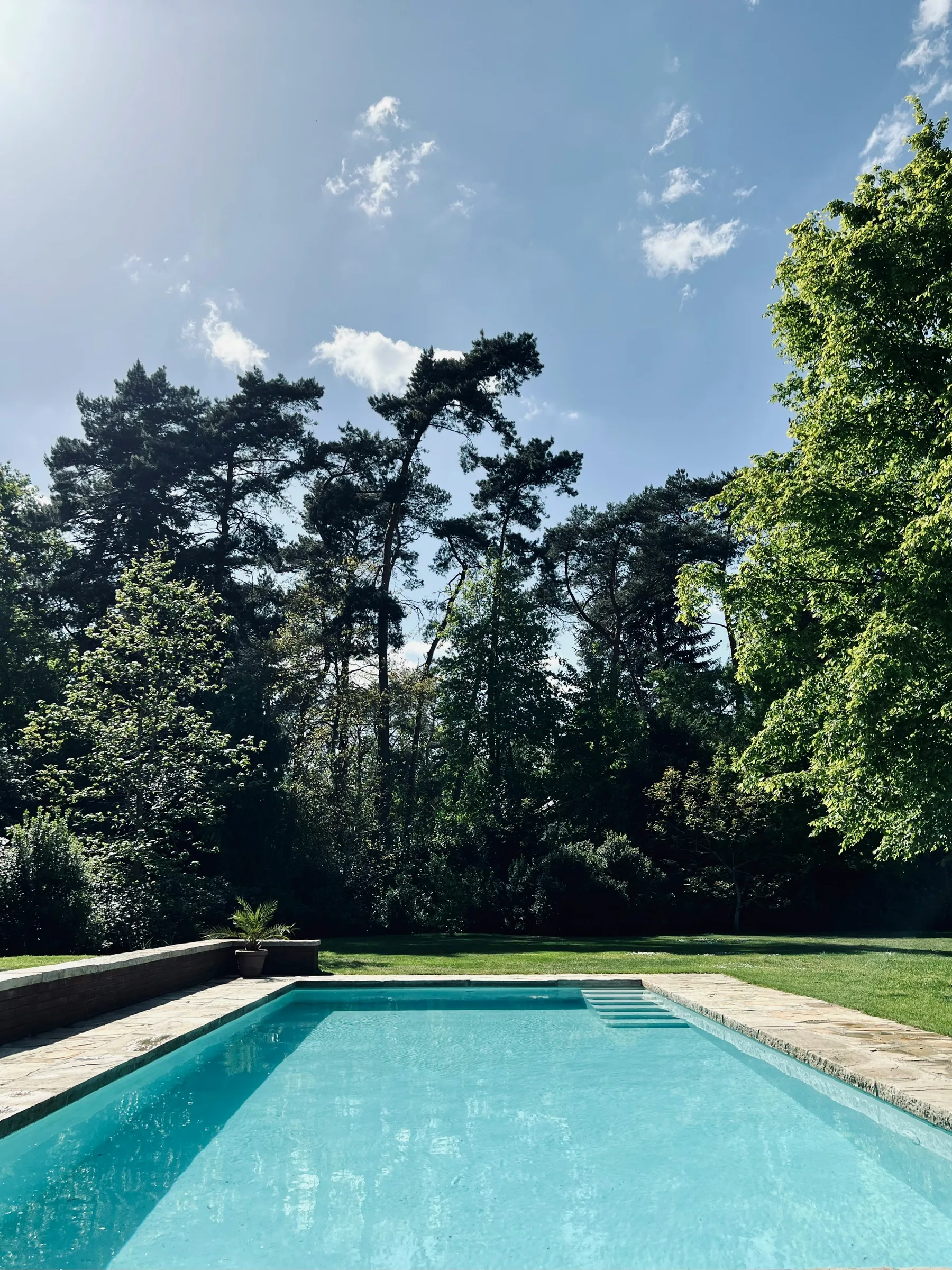

A permanent backyard,
built one decision at a time.
An inground pool changes the grading, circulation, utilities and daily movement of a property. The best system is not simply the one with the most attractive finish - it is the one that fits the site, design goals, ownership expectations and companies available to build it well.
Start with how the pool will be used. Swimming, play, exercise, entertaining and relaxation lead to different dimensions, depths and entry features. Then examine the site: machine access, setbacks, overhead wires, buried services, slope, drainage, soil, groundwater and the location of the equipment pad. Those practical details can remove options or reveal costs long before finishes are selected.
The contractor comparison begins after the project is defined. Give bidders the same pool concept and ask each to identify structure, equipment, deck, safety, approvals, restoration and assumptions. A quote that appears higher may include work another company has left for later.

The right pool system fits the property, the design and the way you want to own it.Resolve that choice before colours, tile and water features take over the conversation.
Vinyl, fiberglass or concrete?
All three systems can create an excellent residential pool. The differences are in design flexibility, delivery and installation method, interior maintenance, access requirements and how the quote is assembled. Use the table as a starting point, then ask local installers to explain how their preferred system is prepared for your soil and climate.
 Vinyl liner
 Fiberglass
 Concrete
Ranges are broad complete-project planning figures in Canadian dollars, not quotes or itemized pricing. Property access, engineering, soil, groundwater, deck, enclosure, equipment, finishes, taxes and regional labour can materially change every system.
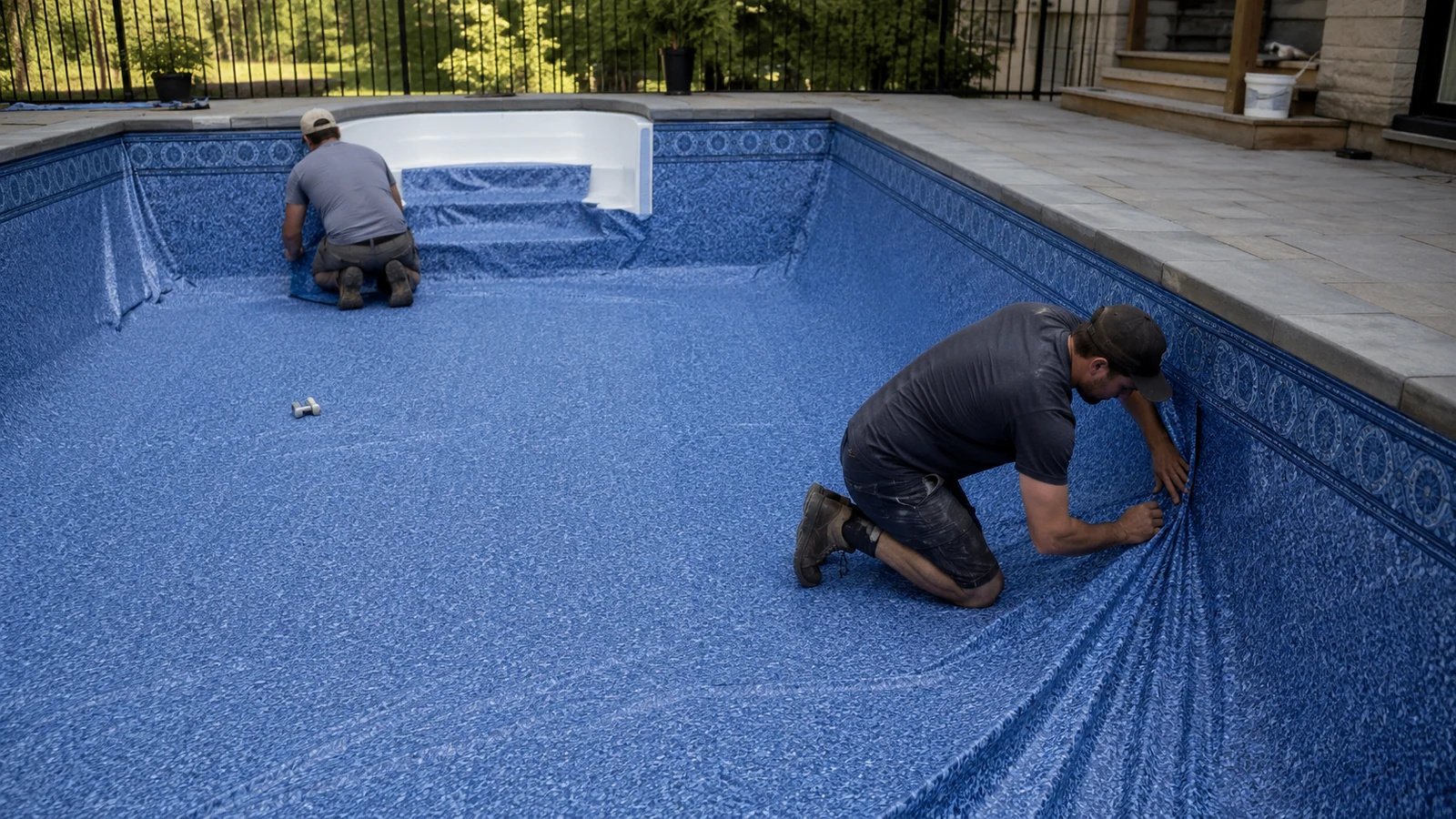
Vinyl liner pools use a structural wall system and a replaceable flexible interior. They can support many shapes and are widely understood by installers. Ownership planning should include eventual liner replacement and care around sharp objects or unsuitable water chemistry.
Fiberglass pools arrive as a finished shell. The on-site sequence can be efficient once excavation is ready, but the selected model must fit the property and delivery route. Ask how the base, lifting, plumbing, backfill and groundwater conditions will be managed.
Concrete pools are formed for the site and can support highly customized geometry, integrated features and premium finishes. That freedom comes with a longer, more trade-intensive build and an interior that may require periodic renewal.
The parts behind the pool.
A complete proposal should make every project layer visible. If the quote says only “pool installation,” ask for detail. You need to know what the builder controls, what will be completed by subcontractors and what remains your responsibility.

Site & access planning
Survey information, setbacks, elevations, machinery access, utility locations, drainage and protection of the existing property.
Excavation & structure
Layout, excavation, disposal, base, pool structure, backfill, compaction and the response to rock, poor soil or groundwater.

Circulation & equipment
Pipe sizes and runs, returns, skimmers, drains, pump, filter, heater, sanitation, equipment pad and winterization access.

Electrical & controls
Bonding, grounding, power supply, lighting, controls, required inspections and clear responsibility for electrical coordination.
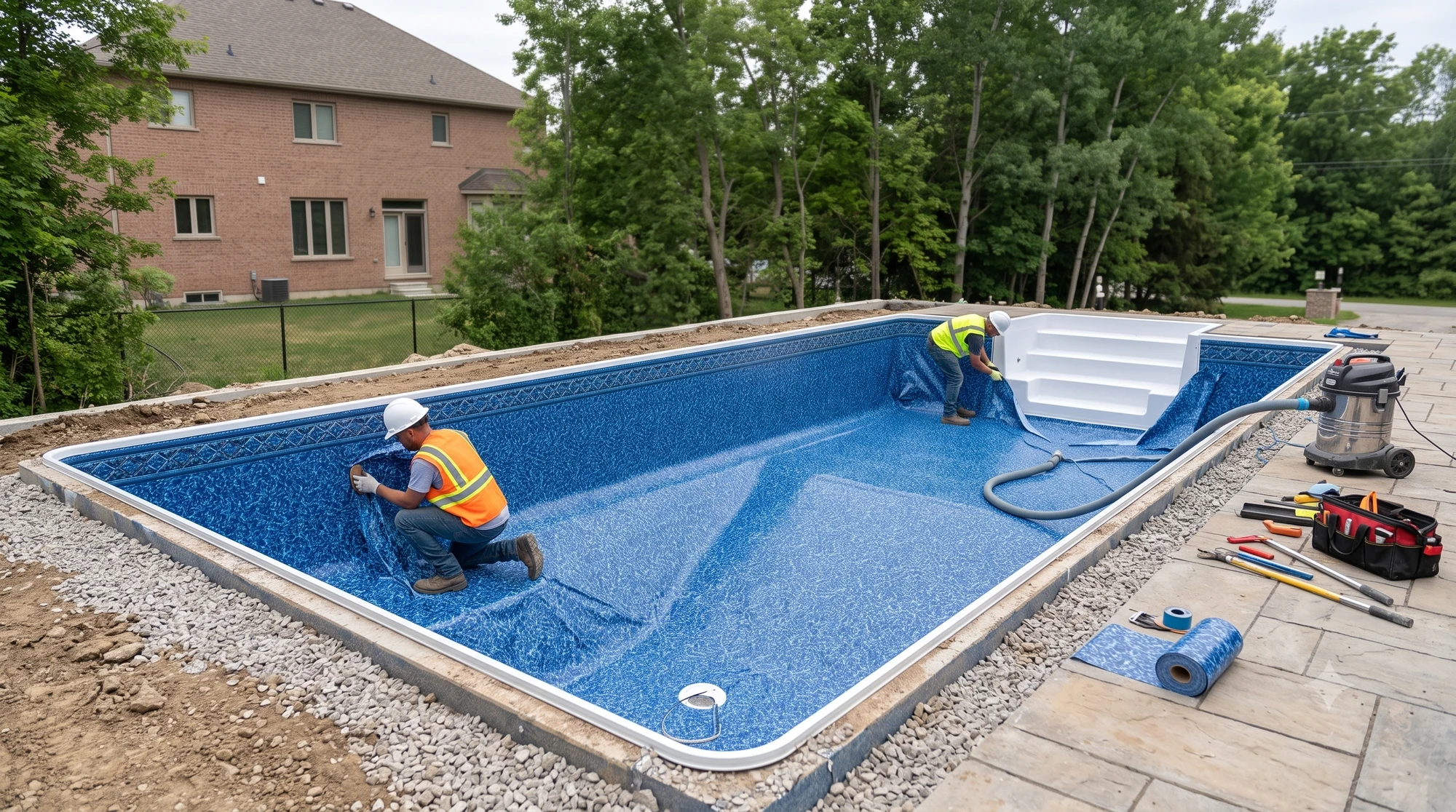
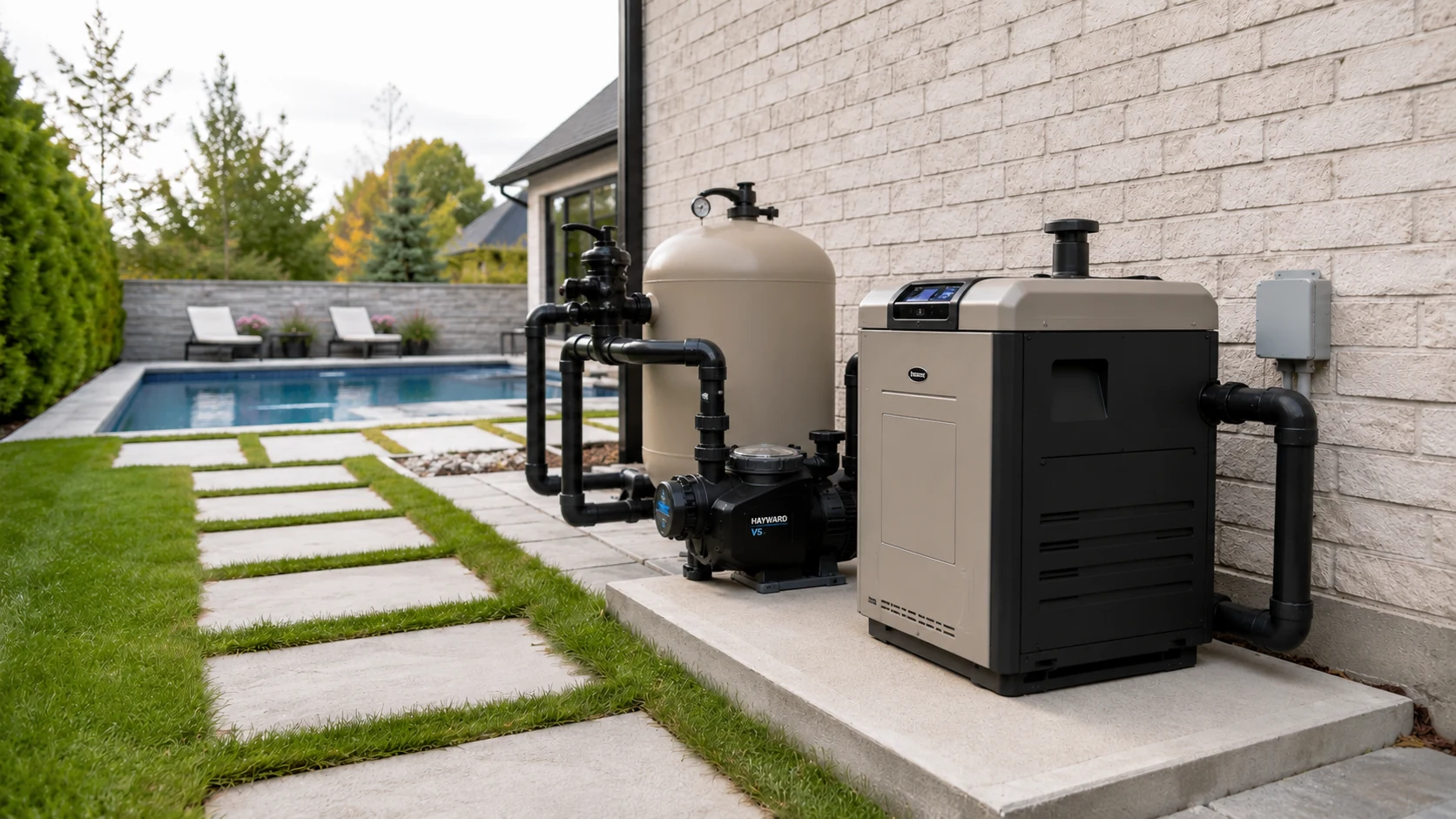
The surrounding work deserves equal attention. Deck elevations must meet the pool edge and direct water appropriately. Fencing and gates must follow current local requirements. Landscaping, retaining, drainage and access restoration determine whether the finished yard feels complete. List these items even when a different company will perform them.

Local approvals before excavation. Winter thinking before water.
Pool permits, enclosure rules, setbacks, electrical inspections and utility-locate procedures differ by province and municipality. Properties near shorelines, ravines, flood-prone areas or protected land may need additional review. Ask the selected company to identify required approvals in writing and state who prepares, submits and pays for each one.
Read the installation timeline →
Soil & drainageBase preparation, controlled backfill and finished grading help protect the pool and the spaces around it.

Freeze-thaw conditionsStructure, plumbing layout, equipment and closing procedures need to work as one cold-climate system.

Local requirementsNever rely on another city’s fence, setback or permit assumptions. Confirm the rules for the actual address.
From layout lines to clear water.
The sequence changes by pool system and site, but every proposal should explain milestones. Ask what must be complete before the next trade arrives, which inspections can stop progress and when weather or material availability could move the schedule.
Site confirmation & layout
Confirm the approved design, elevations, setbacks, access route, utilities and finished relationship between water, deck and yard.
Excavation & structure
Excavate, prepare the base and install or form the selected structure while managing soil, groundwater and material removal.
Plumbing, equipment & electrical
Complete circulation lines, equipment connections, bonding, controls and inspections before access becomes restricted.
Backfill, deck & site completion
Backfill appropriately, establish grades, build the surrounding surfaces and complete required safety barriers.
Interior, fill, startup & handover
Finish the pool, fill and balance the water, test equipment and receive operating, winterizing and warranty instructions.
Questions to answer before design.
There is no universal winner. Vinyl offers flexible shapes and a replaceable interior at a comparatively accessible project level. Fiberglass provides a factory-finished shell and a faster on-site set, but available shapes and access for delivery can limit the choice. Concrete offers the greatest design freedom and the most involved build. All three can perform in cold climates when the site, base, backfill, drainage, plumbing and winterization plan are appropriate.
Depth should follow use, not habit. Families may prioritize broad shallow space for play and standing, while swimmers may want a longer uninterrupted lane. Sun shelves, stairs and benches also consume water area and affect circulation. Diving requires a purpose-designed envelope and applicable safety standards; a deep end alone does not make a pool safe for diving. Resolve activities and supervision needs before selecting the profile.
Often, but the slope becomes part of the structure and budget. A contractor may need engineered retaining, stepped decks, drainage control, elevated walls or specialized access. The result can be visually striking, but assumptions should be tested early through survey information, site elevations and any required geotechnical or conservation review. Ask each bidder to state which slope-related work is included and who is responsible for engineering.
A useful quote identifies the pool structure and interior, excavation, soil removal, base, backfill, plumbing, equipment, electrical responsibilities, startup and warranty. It should also state whether permits, engineering, deck, fencing, drainage, landscaping, utility relocations and restoration are included. Ask how rock, groundwater, poor soil or restricted access are handled and whether the listed amounts are fixed prices or allowances.